Category: Interior details
Glass Is Not Just Transparent — It Shapes How a Space Feels
Glass is often considered a material that simply brings openness and light into a space.
But in interior design, glass does much more than create visibility.
It controls privacy, defines boundaries, adds texture, and influences the emotions we experience inside a space.
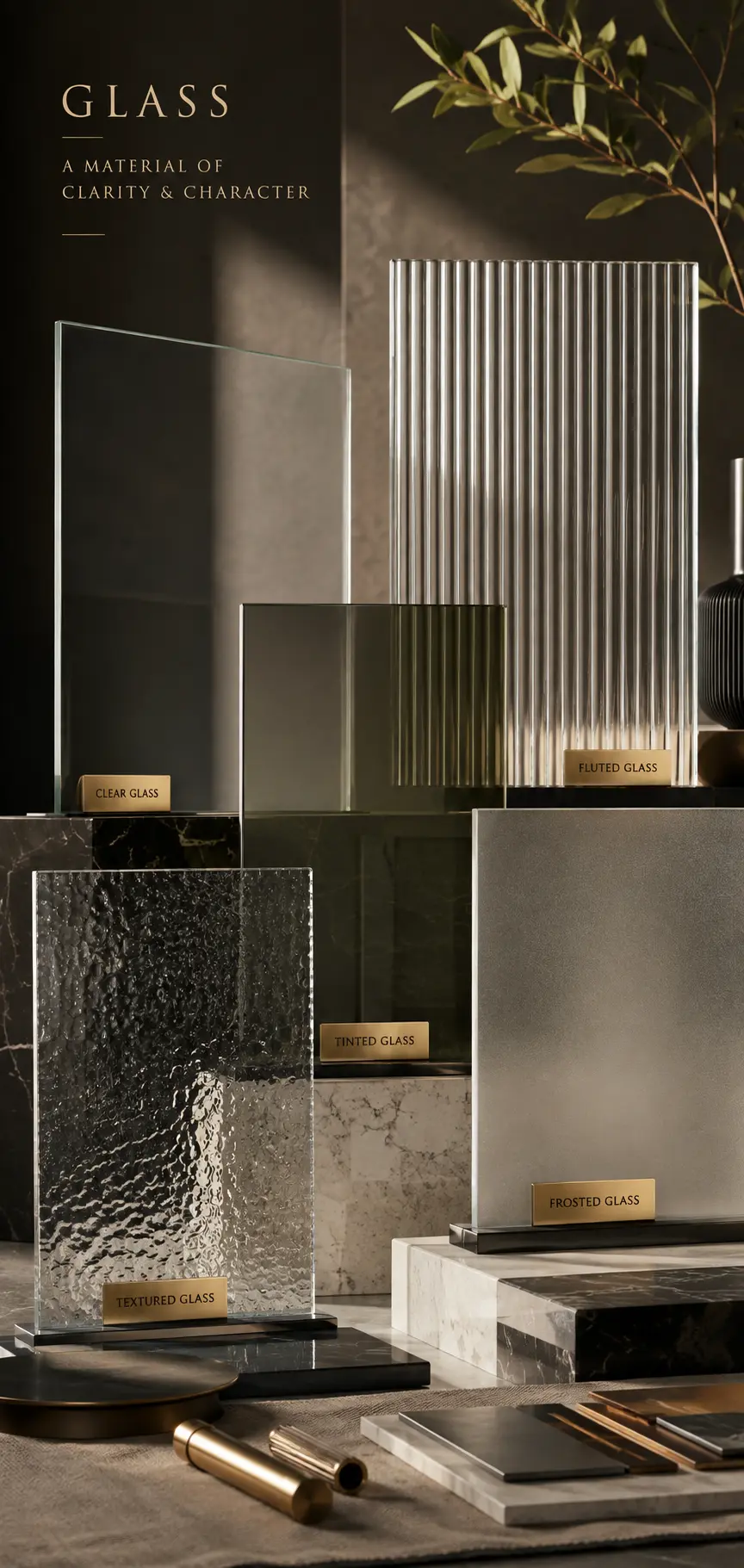
Clear glass creates openness and a seamless connection between areas, making spaces feel larger and brighter.
Fluted glass brings softness and privacy while allowing natural light to flow. Its texture adds depth and becomes a subtle design statement.
Tinted glass introduces personality through colour. Shades like bronze, grey, or black can add warmth, elegance, and a luxurious character to interiors.
Frosted glass creates private zones without making spaces feel closed. It is perfect for areas where light and separation are equally important.
Mirror glass works with reflection, creating the illusion of more space while adding sophistication and visual interest.
Textured and decorative glass transforms a functional material into an artistic element, bringing uniqueness to partitions, cabinets, and feature walls.
The beauty of glass lies in its versatility.
It can make a space feel open yet private, minimal yet luxurious, simple yet expressive.
Because good design is not about choosing materials that only look beautiful.
It is about understanding how each material changes the way we live, move, and feel within a space.
Sometimes, the most impactful design element is the one that allows us to see through it.
— Dhara Ajmera
Interior Designer | Dhara Ajmera Interior Designari Studio
Related Articles
More about Interior details